
High-Fidelity Simulated Avionics for Mixed Reality Training
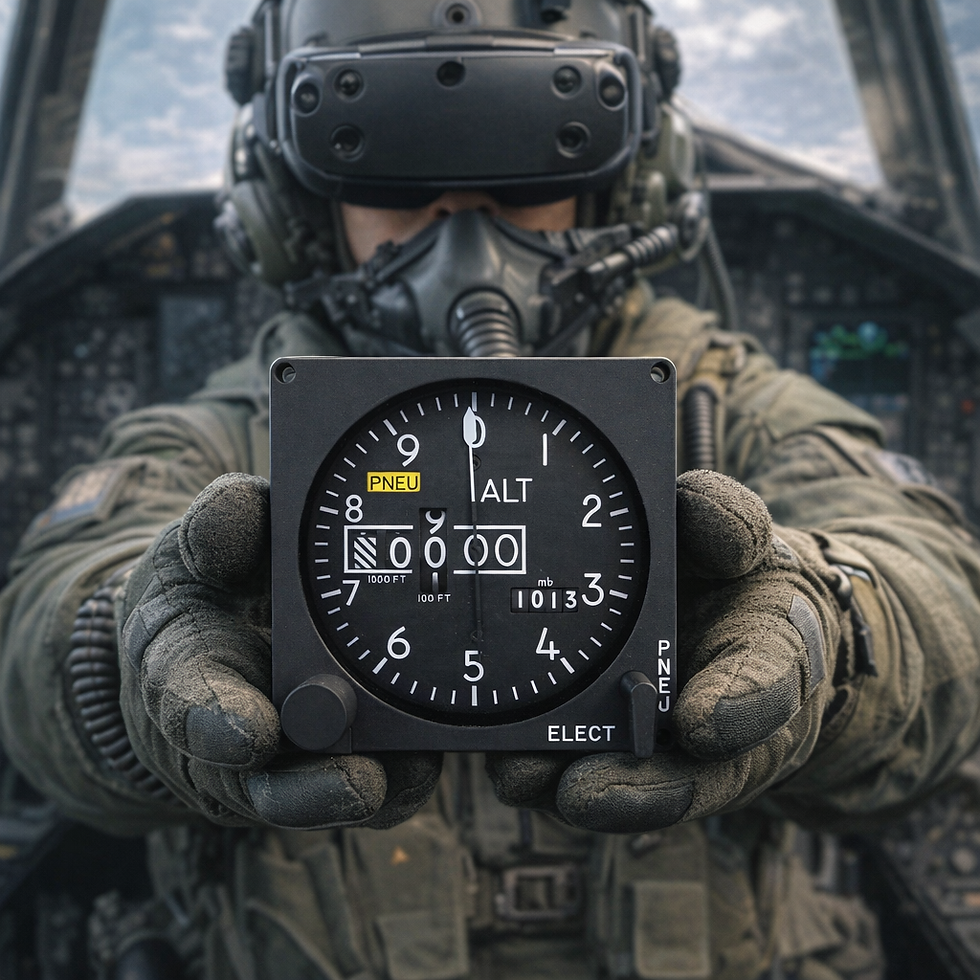
When “good enough” breaks, training stops.
Mixed reality (MR) is changing how aircrews train. Instead of relying solely on full-motion devices or purely virtual cockpits, MR platforms blend real tactile hardware with immersive digital environments. Done right, MR lets crews build muscle memory, execute true-to-life procedures, and repeat complex scenarios—faster, safer, and at a lower lifecycle cost than traditional training paths.
That “done right” part hinges on one thing a lot of MR programs underestimate:
Your physical avionics hardware is the training bottleneck if it can’t survive the pace.
At Simtek, we build high-fidelity simulated avionics designed specifically for training environments where durability, repeatability, and realism matter—especially in MR platforms where students are hands-on, cycles are high, and downtime is unacceptable.
Mixed reality training only works when the physical hardware can keep up. Simtek builds high-fidelity simulated avionics engineered for high-cycle training environments—so your MR platform stays credible, consistent, and online. The result: lower total cost of ownership compared to low-cost hardware that becomes disposable.
Why high-fidelity matters more in mixed reality
In MR training, the student isn’t just looking at a cockpit—they’re interacting with it.
That means the avionics hardware must deliver:
Realistic feel (switch throw, detent behavior, knob torque, pushbutton response)
Reliable repeatability (the same action produces the same result, every time)
Instructor confidence (no “it was glitchy” excuses during evaluation)
System uptime (because MR training schedules don’t pause for hardware repairs)
Low-cost providers often look attractive early in a program. They can ship something quickly, and it can appear “close enough” during a demo. But MR platforms expose weaknesses fast—because the hardware gets used like the real thing, day after day.
Durability: the difference you feel after 10,000 cycles
Durability by design - Built for repeated, hands-on training cycles—day after day.
The hidden cost of “budget hardware” is not the purchase price. It’s the churn.
In MR training environments, common failure modes with low-cost simulated avionics include:
Worn switches and sloppy detents
Broken knobs, shafts, and pushbuttons
Loose fasteners and cracked housings
Intermittent connections and noisy inputs
Cosmetic degradation that erodes realism
Frequent calibration, rework, and swap-outs
When that happens, training isn’t just less realistic—it becomes less reliable. And reliability is everything when you’re trying to run consistent, repeatable instruction across multiple students, shifts, or training sites.
Simtek designs for endurance. Our products are built to withstand continuous, hands-on use so your MR platform stays mission-ready.
Cost of ownership: where Simtek wins (even if we’re not the cheapest line item)
Lower total cost of ownership -Less downtime, fewer replacements, reduced support burden.
If you only compare unit price, low-cost providers can look tempting.
But MR training programs should compare total cost of ownership (TCO):
1) Less downtime
Every hour a device is down is lost training capacity. Lost capacity turns into:
schedule slips,
instructor inefficiency,
and expensive catch-up time.
2) Fewer replacements and repairs
Cheap hardware often becomes “consumable.” High fidelity hardware becomes an asset.
3) Stable performance over time
Training value depends on consistency. If hardware behavior changes as it wears, your training outcomes drift.
4) Reduced support burden
When hardware is reliable, your team spends less time troubleshooting and more time training.
5) Higher realism = better transfer to the aircraft
The closer the interaction feels to the real cockpit, the less “relearning” happens later—and the more confident the trainee becomes earlier.
Simtek’s approach: build simulated avionics that hold up like training equipment should—so your MR platform stays ready, credible, and cost-effective across its full lifecycle.
High fidelity isn’t just “more detailed”—it’s more dependable
High fidelity that stays consistent -Tactile feel and performance you can trust across students and shifts.
High fidelity means more than matching the look. For mixed reality training, fidelity must include:
Mechanical fidelity: feel, resistance, tactile feedback, alignment
Functional fidelity: correct input behavior and response characteristics
Environmental ruggedness: the real world of training—constant use, transport, setup/teardown, and occasional abuse
Simtek’s goal is simple: make hardware that doesn’t become the weak link.
Built for MR platforms, built for training reality
Mixed reality training is pushing the boundaries of what simulators can do. But MR only delivers on its promise when physical hardware can keep pace with the intensity of modern training cycles.
If you want a platform that runs longer, breaks less, and feels right every time a student reaches for the controls, Simtek is your partner for high-fidelity simulated avionics built to perform for the long haul.
Ready to reduce downtime and increase training realism?
Let’s talk about your MR training platform and how Simtek can support it with durable, high-fidelity simulated avionics that lower total ownership cost.
Let’s talk MR hardware.If you’re building or upgrading a mixed reality trainer, Simtek can supply high-fidelity simulated avionics that reduce downtime and improve training outcomes.
#Simtek #MixedReality #MRTraining #FlightTraining #Simulation #SimulatedAvionics #TrainingSystems #DefenseTraining #Aviation #CockpitSimulation #HighFidelity #TotalCostOfOwnership #Durability #UptimeMatters


